Area Guide
Kommetjie and the South Peninsula — surf, scenery, and what to do beyond the break
Kommetjie sits at the point where the Cape Peninsula stops feeling suburban and starts feeling genuinely wild. The drive from Cape Town city centre takes 45 to 55 minutes depending on traffic through Hout Bay and Chapman's Peak, and the change in atmosphere by the time you arrive is striking — bigger ocean, more exposed cliffs, fewer people, and a surf scene that attracts the kind of local who is willing to make the commute for better waves and fewer crowds. If Muizenberg is where Cape Town learns to surf, the South Peninsula is where it gets serious about it.
The Peninsula's west-facing coastline from Noordhoek down through Kommetjie, Long Beach, Scarborough, and Misty Cliffs receives swell from a different angle than the Table Bay beaches and has a different wind shadow from the mountains behind it. A day when the southeaster is destroying Bloubergstrand can be offshore or light at Kommetjie. Checking the live Kommetjie surf report alongside the Table Bay reports before choosing your beach is worth doing every time — the contrast can be surprising.
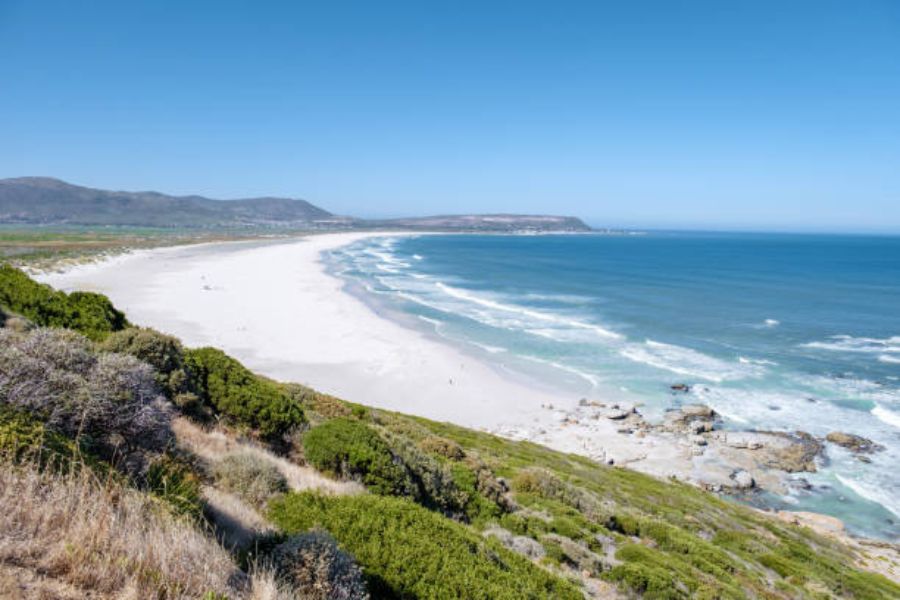
Understanding the South Peninsula surf coastline
The South Peninsula's surf geography breaks into roughly three zones, each with a different character. Noordhoek and Long Beach at the northern end of the stretch form a wide, exposed beach break that handles most swell sizes and works best on a moderate-sized northwest or southwest swell with light to moderate northwesterly or offshore wind. Long Beach also has a kite zone at the southern end — protected enough from the full southeaster by the mountain behind it to be launchable on days when the Atlantic coast is too rough for kite conditions.
Kommetjie village itself sits at the far southern end of Long Beach, and The Point at Kommetjie — the rocky point break at the tip of the bay — is the main focus of local surf attention when conditions align. The Point is not a beginner wave. When it is working on a solid southern or southwestern swell with offshore wind, it produces powerful, hollow left-handers over a rocky bottom that attract experienced surfers from across the city. It can be misleadingly quiet on the live report and deceptively heavy in person — local knowledge matters here more than the forecast numbers alone.
Scarborough, a 10-minute drive south of Kommetjie, is one of the most remote-feeling beaches accessible by road on the Peninsula. The village is tiny, the beach is exposed and often heavy, and the drive adds a genuine sense of commitment. It picks up more south and southwest swell than Kommetjie due to its geography and is worth the extra drive on the right day. Check the Scarborough surf report before committing — the extra distance only makes sense on a promising forecast.
Misty Cliffs, south of Scarborough and accessible by a rough track, is the most committed call on the Peninsula. The beach sits in a cliff-framed bay that is difficult to access and completely exposed to open Atlantic swell. It is at its best in small-to-moderate swell on calm mornings, and the isolation means you will almost certainly have it to yourself. Check the Misty Cliffs surf report and be prepared for variable access conditions — the track deteriorates significantly in wet weather.
The water and the wetsuit reality
The South Peninsula's west-facing coastline is on the cold Benguela Current side of the Cape — colder and more powerful than False Bay. Water temperatures here run from around 10 to 12°C in winter to 14 to 16°C at peak summer, and the full fetch of the Atlantic creates a more powerful wave environment than False Bay's sheltered bay. A 4/3mm wetsuit is standard for most of the year on the Peninsula's west coast, and hoods and gloves are common in the colder months. This is not a coastline where you can get away with a springsuit regardless of what month it is.
Where to eat near Kommetjie
Kommetjie village is small and its food options reflect that — a couple of local cafes and a convenience store are the main options in the village itself. If you want more than a quick coffee and a toasted sandwich, the better option is to plan food around Noordhoek Farm Village, around 10 minutes north of Kommetjie on the road between the Peninsula and Hout Bay.
Noordhoek Farm Village is a small collection of restaurants, a wine shop, a bakery, a deli, and local producers set in a working farm environment with mountain views. It handles both pre-surf breakfast and post-surf lunch well and is considerably more interesting than anything you will find in Kommetjie village itself. The Cape to Cuba restaurant there has been a long-running favourite for a proper post-surf meal. Scarborough has a couple of local cafes with a more village-level offering — they suit the remote character of that part of the Peninsula but should not be the primary reason to make the drive.
Pre and post-surf
Noordhoek Farm Village
The best food stop on the South Peninsula with a deli, bakery, wine shop, and multiple restaurants 10 minutes north of Kommetjie. Plan meals here rather than the village itself.
Village stop
Kommetjie village cafes
Small local cafes in Kommetjie village suit a quick coffee between sessions. Not destination dining but perfectly adequate for a pre-paddle stop.
Scarborough
Scarborough café strip
A small handful of local cafes in Scarborough village. Worth using if you are heading that far south for a session, but not worth the drive on its own.
Where to stay on the South Peninsula
Accommodation on the South Peninsula runs heavily toward self-catering cottages, farm stays, and small guesthouses rather than conventional hotels. Staying in Kommetjie, Scarborough, or Noordhoek rather than central Cape Town pays off when you are tracking a multi-day swell window — being five minutes from the beach instead of an hour means you can check conditions at dawn, paddle out if it looks good, and still be back for breakfast without having wasted half the session window in the car.
Noordhoek has more accommodation variety than Kommetjie village, and its position between Chapman's Peak and the beach makes it convenient for both the Long Beach surf scene and the Chapman's Peak drive. Scarborough is the most committed base for serious surfers who want proximity to the south Peninsula breaks — accommodation is limited but the village atmosphere and access to Scarborough, Misty Cliffs, and Kommetjie makes it worth seeking out.
Chapman's Peak and the drive there
Getting to Kommetjie from Cape Town city centre through Hout Bay and Chapman's Peak is one of the most spectacular road drives in South Africa. Chapman's Peak Drive is a 9-kilometre cliff-hugging road blasted through the western face of Chapman's Peak mountain in the 1920s, with 114 curves cut into a cliff that drops almost vertically into the Atlantic below. The drive costs a toll fee and closes in bad weather when rockfall risk is high, but on a clear morning with the ocean below and the mountain above, it redefines what a commute to a surf can feel like.
The alternative route via Constantia Nek and then Noordhoek Valley adds 20 minutes and significantly less drama, but is always accessible regardless of weather. Check whether Chapman's Peak is open before you plan around it — the road gates are clearly signed and the toll booth website has current status.
Cape Point and the Peninsula day trip
The Cape of Good Hope section of Table Mountain National Park occupies the southern tip of the Cape Peninsula and is the logical extension of any Kommetjie surf day when the forecast is good and the windows align. Cape Point lighthouse sits at the tip of the Peninsula on cliffs that drop straight into the Atlantic, and the views across to False Bay on one side and the open ocean on the other are genuinely extraordinary. The fynbos landscape through which the park road runs is unlike anywhere else on earth — the Cape Floristic Region is one of the six global floral kingdoms and this section of it, close to the continent's tip, has plants found nowhere else.
Bontebok, eland, baboons, and a variety of coastal bird species are commonly seen through the park. The baboons at Cape Point are habituated and can be aggressive around food — do not feed them and keep car windows closed. Ostrich are occasionally encountered on the road. Entry to the national park requires a fee and is worthwhile for a half-day or full-day extension to a Peninsula surf mission, particularly for visiting surfers who will not have many other chances to see the Cape's native landscape up close.